Story
After the Bac, I was accepted into the BUT Computer Science program via Parcoursup. I chose the Lannion campus and leaned into the data-oriented track.
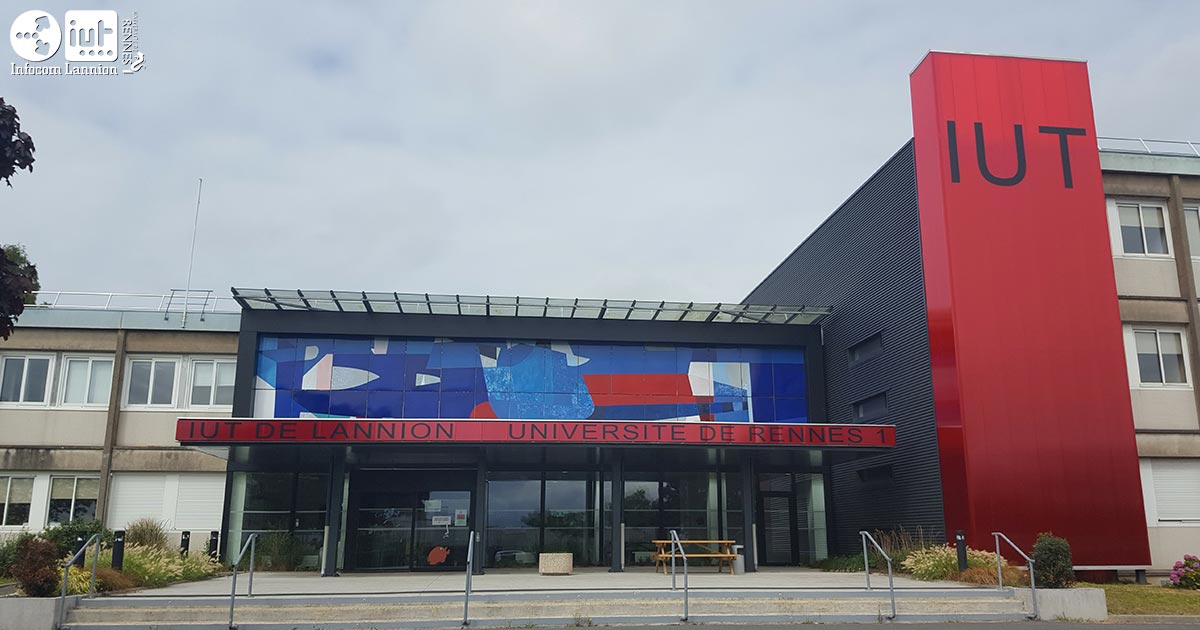
After the Bac, I was accepted into the BUT Computer Science program via Parcoursup. I chose the Lannion campus and leaned into the data-oriented track.

Designing, creating and implementing IT solutions that meet the digital transformation needs of companies is the daily life of the holder of the BUT in IT, regardless of the sector in which their company works.
In three years after the baccalaureate, the BUT offers university training that combines theory and practice, with an emphasis on progressive professionalization for rapid integration, while guaranteeing a sufficient scientific level to allow those who wish to continue their studies.
The holder of the BUT specializing in IT is competent on technical and methodological levels while being aware of current issues (data security, cloud computing, artificial intelligence), on societal, legal, ethical and environmental issues related to the uses of digital technology.
At the end of a one-year common core, the student will be able, depending on their professional project, to choose one of the four paths offered by the IT specialization.
The BUT is organized into 6 skills:
Main goal: understand how things work by building them, fast.
A hands-on year, focused on doing, where complexity stays visible and manageable.
Develop — that is, design, code, test and integrate an IT solution for a client.
Offer computer applications optimized according to specific criteria: execution time, precision, resource consumption.
Optimized Sudoku grid solver. Comparing algorithmic approaches (S1.02)
Install, configure, make available, maintain operational infrastructures, services and networks and optimize an organization's IT system.
Automation, scripts, containerization, Markdown parser. Setting up a development environment (S1.03)
Design, manage, administer and exploit company data and make available all the information for good management of the company.
Design and implement a database. Creating a database (S1.04)
Satisfy user needs with regard to the customer value chain, organize and manage an IT project using traditional or agile methods.
Create a fake streaming website. Collecting needs (S1.05)
Acquire, develop and exploit the skills necessary to work effectively in an IT team.
Optimized Sudoku grid solver. Comparing algorithmic approaches (S1.02)
Automation, scripts, containerization, Markdown parser. Setting up a development environment (S1.03)
Design and implement a database. Creating a database (S1.04)
Analysis of Focus Entertainment's CSR report Economic environment (S1.06)
The curriculum reads like a climb in abstraction and responsibility:
That mirrors the progression of roles in the industry while keeping a solid technical base.
I particularly enjoyed the first year: immediate immersion into practice with theory in parallel.
It fits how I learn best: learning by doing and concrete deliverables.
The following years add the tools needed to understand real-world constraints and modern systems.
After the BUT, I intend to continue toward an engineering degree.
Schools on my radar: ENSSAT (Lannion), ENSI (Caen), ENSIMAG (Grenoble).
My second-year internship at Engie was my first true experience inside a large team, with visible impact.
Beyond technical skills, two lessons stood out:
Since that internship, I returned to Engie as an apprentice, contributing to various development missions.
These experiences solidified my plan to become a software engineer.